

025 Normal Labs, Real Symptoms: Patient Advocacy & Hope with Rheumatologist Dr. Reeti Joshi

025 Normal Labs, Real Symptoms: Patient Advocacy & Hope with Rheumatologist Dr. Reeti Joshi

When your labs say “normal” but your body says otherwise—Dr. Reeti Joshi shares advocacy tools, faith, and hope for chronic illness.
What You’ll Learn
Why “normal” labs can still miss real disease activity—and how doctors actually interpret results in context of your story
Concrete ways to self-advocate (questions to ask, when to seek a second opinion, and how to communicate across specialties)
How a physician with her own autoimmune disease builds trust, listens, and practices shared decision-making
Why second and third visits often unlock key history—and how to prepare for them
“Never give up”: practical encouragement for long hauls, older patients, and anyone feeling burned out by the system
The quiet power of faith/spirituality, community, and small daily rituals (hello, hot tea ) in the healing journey
Memorable Quotes
“Patients rarely read a textbook. In autoimmunity, you often have to turn the textbook upside down.” —Dr. Joshi
“I can’t interpret your labs without hearing your story. History is the first test.” —Dr. Joshi
“Sometimes advocacy means not taking no for an answer—and overcoming gaslighting to get the care you need.” —Dr. Joshi
“Never give up. There’s always new science coming—and there’s always a next right step.” —Dr. Joshi
“We’re very adaptable; we reshape life around illness. Part of the work is seeing how long this has really been with us.” —Dr. Joshi
Reflection / Journal Prompt for the Week
When did my symptoms truly begin (not just when they became unbearable)?
What parts of my life have I quietly reshaped around illness—and what do those patterns teach me now?
Who is my “pillar of strength” (doctor, nurse, friend, spouse, community)—and how can I lean on them this week?
One Tiny Step for the Week
Bring a 1-page “advocacy sheet” to your next appointment:
Top 3 symptoms (with impact on daily life)
3 questions you need answered
1 non-negotiable (e.g., “I need you to explain how this plan fits my actual day-to-day limits.”)
Resources
The One-Minute Joy Journal (find one thing good, even on hard days) → [Link to your product]
Contact Dr. Reeti Joshi: drreetijoshi@gmail.com
Find support & community: The Unseen Sisterhood newsletter → [Link]
Patient advocacy starter list (questions to bring):
“How does this result fit my symptoms?”
“If this lab is ‘normal,’ what else could explain my pain/fatigue?”
“What’s the next step if this plan doesn’t help in 4–6 weeks?”
“When should I seek a second opinion or a higher-level center?”
Credits
Host & Producer: April Aramanda
Music/Editing: Envato
Transcription
April Aramanda: Today, I am joined by my own rheumatologist, Dr. Rey Jooshi. She has been such a key part of my journey with chronic illness, and I’m so excited for you to get to hear from her as well. She’s passionate about patient advocacy and helping people find doctors who truly listen. Dr. Joshi, thank you so much for being here today.
Dr. Reeti Joshi: Hey, April. Thanks for having me.
April Aramanda: I’m so excited about this interview because I’ve been waiting a while for us to be able to do this. You have been such an instrumental role in me getting to where I am right now with chronic illness. Not just in my understanding of it all, but you know, and having the right medications and all that kind of stuff, but in how I am able to talk about it to people.
April Aramanda: And so I am really excited about today’s interview. So have you always wanted to be a doctor? Was that an always thing?
Dr. Reeti Joshi: Uh, no. But I will circle back to that question with what I wanted to do, which was to be a teacher.
April Aramanda: Okay.
Dr. Reeti Joshi: And um I feel that a very big part of what I do in my medical day, seeing patients, talking to patients, talking to family, I have been able to successfully achieve my dream of becoming a teacher in a
April Aramanda: Oh.
Dr. Reeti Joshi: in a different capacity.
April Aramanda: Yeah.
Dr. Reeti Joshi: Um you know, as you know, chronic illness is a learning process and we’re in it together. And um I am completely satisfied with the way I do things now that allows me to be an even bigger part of your lives.
April Aramanda: Good. That’s awesome. Well, so how did you come into rheumatology then?
Dr. Reeti Joshi: So um you know April I once I became an internal medicine resident so you know I knew pretty early on that I wanted to be a teacher.
Dr. Reeti Joshi: I wanted to go into academics and I enjoyed working with people and families and um just felt that once I did internal medicine, I was originally going to do gastroenterology and I was fascinated by the autoimmune part of gastronology. Um, and it just so happened that on my very last rotation before I had to make a decision as to what what career path I would pick, I ended up with a great mentor, Dr. Frank Arnett, who actually described the criteria for rheumatoid arthritis diagnosis. Um, and he uh completely changed my career trajectory. Um, obviously we’re on a podcast where we’re talking about being candid and to be completely honest, I myself have an autoimmune disease and my reaction prior to that rotation was to run away from it, to deny the reality
April Aramanda: Yeah.
Dr. Reeti Joshi: of having a chronic disease to my own self. Um, and that rotation sort of changed the whole perspective on things. And so my disease, facing the reality of my disease, having a great mentor and just learning how chronic disease can be mitigated uh with certain medications, counseling, treatment, holistic approaches.
April Aramanda: What?
Dr. Reeti Joshi: I think that swayed and made my decision.
April Aramanda: Oh, that’s really cool. It’s It’s always neat when someone has one of those moments with somebody that you get this kind of aha moment in your own mind. You’re like, “Wow, this is what I need to be doing. Okay, this makes sense.” And
Dr. Reeti Joshi: Right.
April Aramanda: to to speak to the uh denying it, we all do it. I did it this week and I know I have chronic illnesses. I’ve got a whole podcast about it, but I denied it for the week and now I’m going to pay for it on the weekend. So, it’s normal.
Dr. Reeti Joshi: Yes. And I think in the reality of the denial runs so much deeper. at some point in time you feel that if I say I don’t have it or I ignore it, it will go away. Um, and I find it very empowering that you’re doing it because my greatest successes, my greatest highs of highs in rheumatology has been when I sat down with someone and I told them, listen, I have what you have.
April Aramanda: Right.
Dr. Reeti Joshi: I understand at a very personal level what you’re going through.
April Aramanda: Yeah.
Dr. Reeti Joshi: Um, and the fact that I feel like a whole burden of I have an a silent illness, I have an unseen illness just lifts and it just takes my patient doctor relationship to a very different level.
April Aramanda: Right.
Dr. Reeti Joshi: Um, and I’m sort of now getting more comfortable admitting it at the first visit. Initially, I wouldn’t do it until years into the course and that too I would accidentally slip saying I’m on this medicine too.
April Aramanda: Right.
Dr. Reeti Joshi: You should take it. But now I feel that being open about it allows them to feel they’re not alone.
April Aramanda: Well, I can tell you firsthand it does because most of us when we’re starting off trying to figure out what’s, you know, what we have and what’s going on with our bodies run into the run-of-the-mill you’re a woman and all the other things that happen. It’s anxiety, it’s stress, all those things. And so we go through all these physicians who aren’t really listening and don’t really understand even if they are trying to listen because they weren’t taught about it or you know anything like that good or bad it’s what
Dr. Reeti Joshi: Mhm.
April Aramanda: it is. And so having a physician that actually can say I actually am going through this too. I know how you feel. I know how scary it is at first. I know what you know whatever the case is. So that’s a huge thing and I appreciate as a patient that you do that and you have said that one of your biggest topics of care is being a self- advocate that also helps us become that. So what does that look like in practice for your patients being a self- advocate
Dr. Reeti Joshi: So you know advocacy is so important at so many levels but first and foremost I believe you cannot help anyone until you have helped yourself and that can be at a very macro level or a very micro level. Um, I have always had an open line of communication with my patients, but I tell them that they should not feel that I am the only doctor they can open up to and I tell them that I take
April Aramanda: Right.
Dr. Reeti Joshi: this trust. I understand that they have entrusted their care in my hands and I take it very seriously. uh but I empower them with the tools, the knowledge and the right questions they can ask someone else who is not in my shoes, who doesn’t have that experience or may have compassion fatigue, which which truly is a
April Aramanda: Mhm. Right.
Dr. Reeti Joshi: very big deal. You know, you may want to feel compassion for your patient, but a you’re not in their shoes nor you have the time or you’re just so run down by the system that a lot of doctors um may feel
April Aramanda: Yes.
Dr. Reeti Joshi: that they can’t extend themselves any further. And so I feel arming my patients with the knowledge to ask very objective questions um and sometimes is just not taking no for an answer. you know sometimes it is the gaslighting that we have to learn to overcome so that we can get what we want.
April Aramanda: Yeah. Right.
Dr. Reeti Joshi: Um that education like I said I’m ultimately a teacher.
Dr. Reeti Joshi: Um the word doctor in Latin means to teach and so really truly that is very core to what we do on in our clinic.
April Aramanda: Yeah, that is true. it is extremely core in your clinic. So in finding trying to find the right doctors to listen to you because not everybody’s going to be as lucky as I was to find you um and or may not live in this in the area that you are in right now. So in your experience, what are some signs of a doctor who will listen versus one who might not? Like what are some things that could help a person on that first visit understand if this is going to be if they can really advocate for themselves with this doctor or if they’re going to have to maybe try to find somebody else.
Dr. Reeti Joshi: Oh my gosh. I think you got the toughest question out first.
April Aramanda: I know. Well, at least it’ll be done.
Dr. Reeti Joshi: You know, I feel April um ultimately it’s the doctor community who has to carve out their colleagues that they feel most comfortable with working with.
Dr. Reeti Joshi: I’ve always been able to establish that rapport with my colleagues. Um I’ve always been an advocate for my patients towards them so that they when I call and I say Dr. Joshi wants me to talk to you about this issue for some reason I have not had that problem.
April Aramanda: Right.
Dr. Reeti Joshi: So I really um but you know yeah speak so you know we’re in small town that does help knowing people does help but I feel that get the tools from your rheatologist of how you need to communicate with
April Aramanda: That’s good.
Dr. Reeti Joshi: your other specialists. Um most rheatologists feel that our patients have very complicated issues. they have burdens that other doctors may not see simply because a lot of times you gave me a t-shirt which says guess what my labs are normal you know um so really have the knowledge um and talk to your subsp specialist that way um and don’t stop at the first one that dismisses you if you can’t convince that person to change your mind recognize that he may not be able or she may not be able to
April Aramanda: Yeah.
Dr. Reeti Joshi: help you maybe they lack the knowledge maybe um they lack the time or the ability or sometimes it’s just a matter of resources. Um, today just today I had to send a patient to Houston Methodist. What he needed was not available in our area as a medical community and I felt that he would have been better handled in a higher uh tertiary care center. And so really honestly that is the key. If you don’t get the help in your community, don’t shy away from going outside your comfort zone.
April Aramanda: Yeah.
Dr. Reeti Joshi: Um, there is lots of information on social media. I am not very savvy with social media and that is something that I’m trying to work on. Um but I tell my patients all the time if you use all the tools there’s social media there is blogs there are patient stories um I’m a part of a lot of organizations you know we have a state rheumatology society I’m a me a chapter leader for aare which is association of women in rheumatology seek out those types of organizations that are grounded in truth and compassion and equity of care and um take your voice and your situation there.
Dr. Reeti Joshi: Um, and really I have also I’m not opposed to using AI in diagnosis and treatment and I tell my patients if you truly feel that that’s a tool that gives you the answers and that’s a stepping stone that’s not the end all be all but go for it and I would support it.
April Aramanda: Right.
Dr. Reeti Joshi: I do not dismiss any self researchers. If they bring me an article and they want me to review it, I feel that that’s my duty as a doctor to learn and review it and meet the patient where they stand. Doesn’t doesn’t have to mean I have to sacrifice my principles or science, but I want to hear them out, right?
April Aramanda: Right. No, I think it’s important that they feel like you’re hearing them out. I mean, even if you look at it and you say, “I can’t get behind this,” at least you listened. And that’s I think that’s what matters a lot to those of us in this community is that we feel like we’re not listened to a lot by everyone in our lives because it is hard to understand.
Dr. Reeti Joshi: Mhm.
April Aramanda: And so you being willing and other physicians being willing to say, “Well, I will look at it. Let me look into it. Let me read it. I can’t guarantee you I’m going to like it, but let me read it.” I think that’s important. So, I like that you do that.
Dr. Reeti Joshi: Mhm.
April Aramanda: Um, one of the things you mentioned um a minute ago was that, you know, my labs look great. So, this is a challenge for a lot of us with chronic illness, why our labs look normal, but we feel so horrible. Why does this disconnect happen with chronic illness and and that space where I mean my labs looked perfect when I walked into your office but you know well not all of them but you know what I mean and
Dr. Reeti Joshi: Mhm. Yeah. Well, yeah.
April Aramanda: a regular doctor would look at me and say you’re fine. What what is happening there?
Dr. Reeti Joshi: Yeah.
April Aramanda: Why does this happen?
Dr. Reeti Joshi: So, somebody told me a long time ago, patients rarely read a textbook and we are so chained to our textbook knowledge and I think autoimmunity, you really have to turn the textbook upside down and read it after you have read read it the right way.
April Aramanda: Yeah.
Dr. Reeti Joshi: Um, and I tell I tell patients all the time, everything that you live in affects your immune system. Everything that you ingest, inhale affects your immune system. And really, I cannot interpret your labs and compare them to someone else’s. Number one, but I cannot interpret your labs in isolation to your symptoms at any given point in time.
April Aramanda: right?
Dr. Reeti Joshi: Because patients will come and they will come for a first visit with a bunch of labs and they will want me to explain the labs and I tell them I can explain your labs after I have heard your story because I cannot interpret the lab without hearing your story. So to to me the story if I had one test to order it would be no testing.
Dr. Reeti Joshi: it would be just a history and then I think after that I will use the lab testing to confirm my diagnosis and then at the same time there I went through a journey personal journey myself where I had
April Aramanda: Yeah.
Dr. Reeti Joshi: to learn that what I have assimilated after talking to the patient holds true even in the face of labs that may be contradictory on occasion the labs may not be the right answer for me um and a lot
April Aramanda: right?
Dr. Reeti Joshi: of times s I’m not hesitant to pull back and say, well, let’s stop everything and let’s reset and try to do your labs again and reinterpret them. So, we are very lucky in rheumatology. We have the benefit of mentors that tell us labs are not the end all beall. We’re not one of those specialties where you have to have a tool or a measure for everything.
April Aramanda: Right.
Dr. Reeti Joshi: Although we are trying to establish some standard measurements for our patients um and to the patients if if your doctor is making you fill out forms trust me that information is something he’s going to use to make a clinical decision at on you at some point in time.
April Aramanda: Yeah, it kind of it’s kind of making me think of something. So, in the discussion of physicians that I just heard recently in a YouTube video I was watching that uh talked about acute versus chronic illness and that most physicians are trained in acute illness, meaning something that happens that
Dr. Reeti Joshi: Mhm.
April Aramanda: can be fixed. I broke a finger, I broke a leg, whatever, it can be fixed. And so, the idea of lab work being normal to them that they only know that side of medicine.
Dr. Reeti Joshi: Right.
April Aramanda: And then someone like you and and rheumatology and other things, autoimmune stuff, you’re being taught to learn that actually that might be a little bit different. There might be some things going on that even though your lab might be normal, you’re still having some problem and we need to figure out why. And maybe it’s not a normal for you.
Dr. Reeti Joshi: Right.
April Aramanda: Um, you know, because it can be a low normal, but that’s low for you or something.
Dr. Reeti Joshi: Exactly.
Dr. Reeti Joshi: Correct. Correct.
April Aramanda: Um, yeah.
Dr. Reeti Joshi: Correct. Interpretation of the lab. So a normal lab may not be normal for a rheumatology patient even though it fits the general population parameters. Uh, and secondly, April, we don’t have testing for every disease I treat.
April Aramanda: No. Yeah.
Dr. Reeti Joshi: And if you remember at your first visit, I said, I’m going to prove it by ruling out everything else. You know, I heard your story and now everything that I’m doing is to rule out all the other things that are possible.
April Aramanda: Yeah.
Dr. Reeti Joshi: So, ultimately, the lab can be a tool if we allow it to be a tool, but it can also be a tool to reject you from getting treatment. And so I always caution my patients, I know you want me to test you for this, but let me tell you, I don’t want you to stop seeking care if this lab is normal, you know.
April Aramanda: Right. Right. Right. Well, and for me, it took a course of three years for us to get to a point where everything we could rule out was ruled out.
Dr. Reeti Joshi: Yes.
April Aramanda: So that now these are definitive diagnosises or as definitive as we can be.
Dr. Reeti Joshi: Right.
April Aramanda: Um, and so, you know, don’t lose hope if you’re dealing with that kind of thing. Your labs look normal, but you still feel bad because sometimes that can take years.
Dr. Reeti Joshi: Yep.
April Aramanda: I mean, it’s not an overnight thing as much as we wish it was because again, we’re talking chronic, not acute.
Dr. Reeti Joshi: Yep. Yep. Right.
April Aramanda: So, it’s kind of how it works.
Dr. Reeti Joshi: And you know this right kind of how it works. And a lot of times I tell my patients, your second or your third visit may be your most important visit. You know, you got to know your rheatologist at your first visit, you did the lab work and the X-rays and the imaging and the MRI, and then you have your third visit to round it all off. And a lot of times at my second visits, patients will tell me, you know what, I thought more about the question you asked me because I asked them, when do you think this really started or how long you
April Aramanda: Right. Mhm.
Dr. Reeti Joshi: thought you’ve been dealing with it? But the first thing that comes to mind was the time when it became unbearable. And so they’ll tell me six months and I question them and I say, “Are you sure this has been going on for six months? Are
April Aramanda: Right.
Dr. Reeti Joshi: you sure?” And it’s it’s oftenimes they’ll come at their second visit and say, “You know what? I thought about it. This has been going on since I was in college or I just chocked it up to this and but I’ve had it.
April Aramanda: Right.
Dr. Reeti Joshi: So really the patient, you, me, we are very adaptable organisms. We have just reframed our life structure around our disease. So much so that we have an altered reality of the onset. And you know, part of the journey I try to allow you is really have you come to terms with how long you’ve had it and therefore you may not get an instant answer.
April Aramanda: Right. Right. Well, and it’s funny because sometimes even now my husband and I will be talking about something and I’ll think back to my 20s or my early 30s and I go, “Oh, I was having that symptom back then.”
Dr. Reeti Joshi: Mhm. Yeah.
April Aramanda: And I mean I’ve been dealing with this for you know four three or four years now as far as like treatment goes.
Dr. Reeti Joshi: Yep. Yeah.
April Aramanda: And so it is it is interesting that that that is something that I like you saying. Let me back up. I’m tongue tied people. I like that you said you know sometimes it’s that third visit or the fourth or whatever that really kind of opens up what’s really going on because now you’ve both had time to think on it. So that’s really cool.
Dr. Reeti Joshi: Correct. Correct.
April Aramanda: So, one of the things that I know that you like to say is to never give up. So, what does that mean to you?
April Aramanda: Especially for those of us who feel totally worn out by this medical process.
Dr. Reeti Joshi: h you know what I know I I see it day in and day out. I can tell sometimes um I can tell that they’re slipping away. they’re losing their faith in the system or me or the medicine or sometimes, you know, the deck is turned turned against you. You know, everything that you could possibly have either it was not covered and so don’t get me started on that.
April Aramanda: Yeah.
Dr. Reeti Joshi: That’s another podcast for another day. Or it had side effects or, you know, you were just not able to get an adequate response. And I I tell my patients, you know, I study the research.
April Aramanda: This is
Dr. Reeti Joshi: I follow it. I follow all the pharma blogs. I try to stay up to date with the new mechanism of action. If it’s an experimental drug today, there’s probably a good chance in five years I might have it, you know.
April Aramanda: Yeah.
Dr. Reeti Joshi: Um, so I tell them, you just never give up because there’s always something new being worked on every single day. uh and you know that al and then a lot of times I will tell them let’s go back to the basics what are you doing for your diet what are you doing for your stress reduction what’s your sleep hygiene and I feel that with adequate time and amendments to all of those we can have the autoimmune disease tolerable until something better comes along um and I tell them if you give up think about your family a
April Aramanda: Right. Right.
Dr. Reeti Joshi: lot of my diseases are familial So I encourage them. We always ask, “Do your kids have this? Do your sister, siblings have it?” It just sometimes happens that I may be able to make an impact on so many of a patient’s family members lives that they see that there is still faith, you know, someone else had a better outcome, so maybe I could try a different medicine.
Dr. Reeti Joshi: Uh we do we do hit reset button every now and then in my office. You know, I have had patients tell me, “Look, I’m tired of medicines. I
April Aramanda: Right.
Dr. Reeti Joshi: want to take a break. I want to do something holistic.” I welcome that. I I do tell them what the FDA guidelines are, and I tell them, you know, truthfully, I have to tell you, these are the guidelines, but we’re we’re in a relationship where we want to hear you. You are the patient. Your autonomy. I respect your choice and shared decision making is number one in our clinic, you know.
April Aramanda: Right.
Dr. Reeti Joshi: Um so really that I never give up because there is a new medicine about to be discovered or there is a new way to administer the same medicine or maybe you don’t need a medicine after all. So that’s really truly how I try to bring it back home every single time.
April Aramanda: Yeah. And I I believe that that is unbeliev very very true and especially for most people.
April Aramanda: What would you say to someone who is in their 70s and they have been in a very long l long haul flare kind of thing and it seems like nothing’s really working and they feel like they’re too old to really see those new medications come around. How do you encourage them to just keep going?
Dr. Reeti Joshi: Um you know that that is tricky. Uh but fortunately with autoimmunity there is a process called immune scinessence where your immune system starts tapering off and a lot of times I tell them there is hope because after so many decades of this disease perhaps it will become smoldering. You may get to a point where you don’t feel this bad all the time. Um, I’ll tell you some of my most resilient patients are in their 70s and 80s and they have seen it.
April Aramanda: Wow.
Dr. Reeti Joshi: They have lived it and they have lived through a time when there was nothing available and we always talk back about those days because I have been very fortunate to practice after the biologics were available.
April Aramanda: Yeah. Right.
Dr. Reeti Joshi: So, it’s sort of like a game changer for us.
April Aramanda: Yeah.
Dr. Reeti Joshi: Um but you know those patients will tell me some amazing stories and those are some of my actually biggest advocates. Um you know for them I focus more on frail. I focus more on their bone health.
April Aramanda: Excuse me.
Dr. Reeti Joshi: Uh we do a lot of dementia prevention early on with our patients.
April Aramanda: Yeah.
Dr. Reeti Joshi: You know we talk a lot about diet and then social isolation. It’s a very big deal. we are all very connected yet we’re all very deep in our silos. Um and so I really tell them that their biggest strength is their community you know and they they have to continue to focus on that and continue to enrich their lives.
April Aramanda: Yes.
Dr. Reeti Joshi: Um so those are some of the things.
April Aramanda: Yes.
Dr. Reeti Joshi: Um and then the it is very um uplifting to see them come with their grandchildren or they show me pictures of how they did and I always use that as a great tool and I always say well we
April Aramanda: Yeah.
Dr. Reeti Joshi: got to keep you going. you have a graduation to attend, you know, so um you know that having a family relationship with the patients helps a lot.
April Aramanda: Right. Yeah, I I can see that. So does faith then for you I’m I’m pretty sure that you you are into faith um so how does faith shape how you go about your practice with your patients and your own illness
Dr. Reeti Joshi: So I’m a very very deeply spiritual person although I’m not a religious person. Um I do feel that um I do believe in a higher authority a power a guiding power.
April Aramanda: All right.
Dr. Reeti Joshi: Um I believe that I make a spiritual connection at some level with the patients I see. Um I I really feel April and it’s going to sound very arrogant but it’s not. I feel that God made me put me here to be a rheumatologist for a reason.
April Aramanda: It’s okay. Exactly.
Dr. Reeti Joshi: And I believe that with my own true every fiber of my being.
Dr. Reeti Joshi: Even though I may not understand why he did what he did, I feel that um my job here is not done and I have a lot more to give.
April Aramanda: Yeah. Mhm.
Dr. Reeti Joshi: Um and I’m very very happy to share that belief with other doctors because we feel we have explained away everything but we haven’t explained away the spiritual connections we’re making in our lives.
April Aramanda: Right.
Dr. Reeti Joshi: Um you know um I was speaking to a financial advisor back in 2010. It’s a long time ago. And every year he he meets with me and he always tells me, “Do you remember what you told me a long time ago?” And you know, I feel like I was I told him and I I hope he didn’t think it was arrogance. I feel like I’m born to do this. You know, I was meant to do this. Um I find that when you believe that, it gives you a lot of energy and power and passion.
April Aramanda: It does.
Dr. Reeti Joshi: Um, and I can honestly say I live and breathe and sleep rheumatology and I love it and I wouldn’t do anything different.
April Aramanda: You do. You do.
Dr. Reeti Joshi: So, call me a workaholic.
April Aramanda: You do. the times of night that I’ve gotten a text message, you definitely live rheumatology. But I don’t think it’s arrogant to say that that you believe that God put you in this for a reason. I think that God has a calling on every person’s life and what they do depends on whether or not they’re listening to that calling. But I think that it’s important and I think so I don’t see that as arrogance at all. So you’re um all right. So, is there any encouragement that you would like to leave for anyone watching this that’s in the thick of it right now?
Dr. Reeti Joshi: better days are to come. So don’t give up. Like I say, always, always, always. Um, find a pillar of strength. You know, there is somebody in your community.
Dr. Reeti Joshi: It can be your doctor. It can be your doctor’s nurse. It can be your neighbor. It can be your spouse. Find a pillar of strength, somebody that you would feel comfortable sharing your deepest, darkest emotions. Um, and know that tomorrow there will be something fresh on the table for you to look into. Um and you know truly really I feel that that’s the only way all of us have made it whether it was a learned response or just a subconscious effort that most nobody I see has given up a job. You know they may have modified their work responsibilities or they may have come up with an alternative employment model. They may have come up with a side gig. I just feel like we’re all doing it and we should reward ourselves for doing it. We don’t reward ourselves often and when you are living with a chronic disease, you’re not just living with one disease. You know, the chronic disease and you know, April, I start off with one illness and then, you know, I never seem to get rid of the problem list.
Dr. Reeti Joshi: We always, that’s what we call it in medicine when we’re charting. It’s called a problem list. problem A leads to problem B and then problem C or the medication for problem A caused problem D. So I tell my patients if you only look at the problems you know and don’t reward yourself for overcoming them
April Aramanda: All
Dr. Reeti Joshi: it’s it’s going to be a very delamorous visit but we find successes and and the second thing I tell them is when when we solve something we try to put it on the back burner never lose sight of it because it may come back but at the same time I tell them okay we can move on we can breathe and we and come up with a different solution because the old problem no longer exists, you know.
April Aramanda: right.
Dr. Reeti Joshi: Um, so really short shortterm memory loss in some cases is okay. Forget your problems at night. Wake them up, they’ll be there. But they they will be different.
April Aramanda: I love that.
April Aramanda: Well, that just gave me a place to shamelessly plug my one minute joy journal because I actually wholeheartedly believe in this. What we look for is what we think what we consumes us. And so if we are looking for the bad and the problem and even in the middle of the worst player, you can find one thing from your day to have joy about that you’re grateful for. And so, you know, if you want the one minute joy journal, it’ll be linked down in the show notes. Um, but so I got my shameless plug hot tea.
Dr. Reeti Joshi: For me, mine that’s my hot tea in the morning. I have hot hot cup of tea. Look forward to it. I clear my mind. That gives me joy for that morning. And yes, I I subscribe to the joy journal. I think we all should have our personal that’s our personal armor that we have.
April Aramanda: Yes.
Dr. Reeti Joshi: And um April, I’m telling you, you are truly inspirational cuz when I when I read your website, I felt very happy.
April Aramanda: Thank you.
Dr. Reeti Joshi: Didn’t I tell you that this is such a happy website?
April Aramanda: Good. That’s what I wanted. That’s what I wanted because I I know, you know, I mean, even today I’m having a rough physical day.
Dr. Reeti Joshi: No. No. Yep.
April Aramanda: It’s It can be really hard to live this life and you can go one minute and be fine and the other half of the day you’re down in the dumps. So, my purpose and the whole reason I interview people like you and that I do this podcast is that I want people to be able to find some joy. So, when you said that, you know, my you were happy when you got to read my website that it made you happy, that’s huge for me because that actually says this purpose is working.
Dr. Reeti Joshi: Yeah.
April Aramanda: This is what I’m trying to do.
Dr. Reeti Joshi: Yes.
April Aramanda: So, I’m super glad about that.
Dr. Reeti Joshi: Yes.
April Aramanda: What is your favorite tea?
Dr. Reeti Joshi: Oh my gosh. Look, I’m from India.
Dr. Reeti Joshi: So, we have a down system.
April Aramanda: Right. Right.
Dr. Reeti Joshi: Brew time, the color of the cup, how much milk goes in it, whether milk goes in it, it’s all down to a science.
April Aramanda: Uh-huh.
Dr. Reeti Joshi: Uh, but yeah, so I love love I love a good cup of hot black tea with milk and just a tiny drop of honey.
April Aramanda: Oh.
Dr. Reeti Joshi: Um, and it always has to be in a white cup. Don’t ask me why, but I think I think there is some science behind it to you brew your tea and the color of the tea has a lot to do, but so if it’s not a white cup, you can’t really tell what color it is. Um, so that’s that’s what I look forward to.
April Aramanda: true, All right.
Dr. Reeti Joshi: I mean, you know, I love my plants. I love my gardens. Love my baies. Love my dogs. Love my hubby. Love my work and my patience. Uh, but I have a morning ritual and that starts off with a hot cup of tea.
April Aramanda: That’s awesome. That’s awesome. Well, Dr. Josh, thank you so much for feeding.
Dr. Reeti Joshi: Yours is coffee. I get it.
April Aramanda: It is.
Dr. Reeti Joshi: No, no, with all due respect.
April Aramanda: And I will I will be honest. I had a little extra coffee this afternoon because I’ve had a very long day, but I have been drinking more water today than anything else.
Dr. Reeti Joshi: Good. There you go. The elixir of life.
April Aramanda: Well, that’s right. Dr. Joshi, thank you so much for being on the podcast. We are so glad that you came and joined us
Dr. Reeti Joshi: Thank you, April.
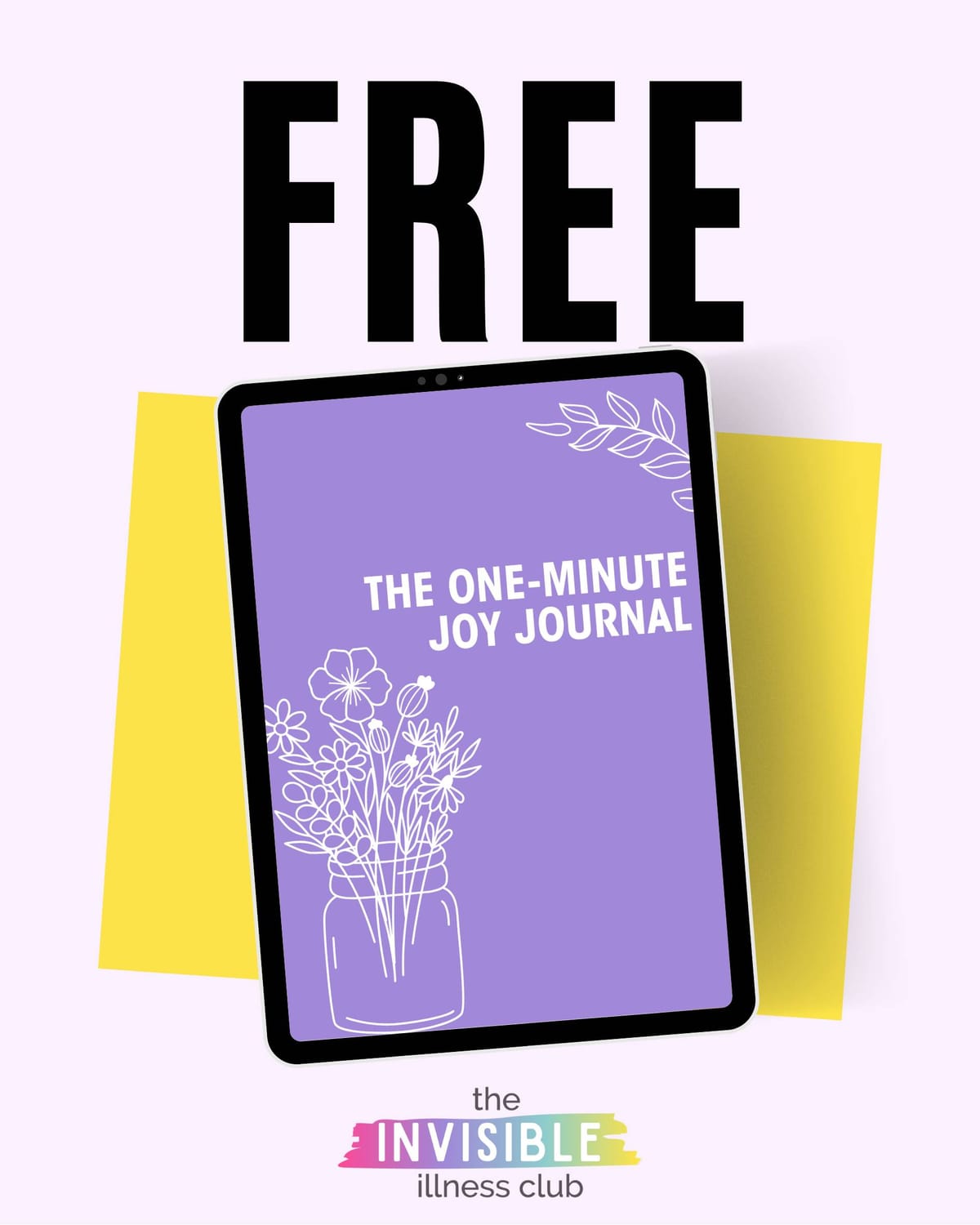
Find More Joy in Just One Minute a Day (Even When You’re Struggling)
This free mini journal is designed just for women living with chronic illness—because joy shouldn’t require energy you don’t have.
The One-Minute Joy Journal is a simple, printable (or fillable!) journal with bite-sized prompts to help you:
Notice the good in the middle of the hard
Celebrate small wins (like showering or not crying in the Walgreens drive-thru)
Feel a little more like you again
Reclaim tiny moments of joy without pressure or perfection
We respect your privacy. Unsubscribe at any time.






The Invisible Illness Club © 2026 | Privacy Policy | Terms | Disclaimer | Web Design by Katie Burd